
Bangladesh’s sporting soul isn’t found only in stadiums and synthetic tracks. It lives in village fields, riverbanks, and festival grounds where traditions stretching back centuries still pulse with raw energy. Traditional sports aren’t relics here – they’re living culture.
Dbbet recognizes this dimension of Bangladeshi sporting identity. As interest in sports in bangladesh continues diversifying beyond cricket, traditional disciplines are gaining renewed appreciation – both as cultural heritage and as genuine athletic competition worth following and celebrating.
What Makes a Sport Truly Bangladeshi
Before foreign games arrived, communities across Bengal were already competing fiercely. The sports of bangladesh that emerged organically from this land reflected its geography, values, and collective spirit perfectly.
Rivers shaped boat racing. Agricultural life shaped stick fighting. These weren’t invented competitions – they were extensions of daily existence transformed into celebration. Understanding this context makes traditional sports feel less like folklore and more like the foundation everything else was built upon.
Lathi Khela: The Art of the Stick ⚔️
Few disciplines capture Bangladeshi martial heritage as completely as Lathi Khela. This traditional stick-fighting art combines combat technique with rhythmic movement, transforming a simple bamboo staff into an instrument of extraordinary skill.
Practitioners train for years to master defensive patterns, footwork, and striking combinations. Competitions during Pohela Boishakh celebrations draw enormous crowds who understand exactly what they’re watching – not performance, but genuine mastery earned through disciplined practice.
Lathi Khela represents something essential within the popular sports in bangladesh conversation: proof that athletic excellence doesn’t require expensive equipment or modern facilities. Just commitment, tradition, and bamboo.
Boat Racing: When Rivers Become Arenas 🚣
Bangladesh has more rivers than roads in many regions. It was inevitable that water would become a stage for competition. Traditional boat racing transforms this geographical reality into spectacular sport.
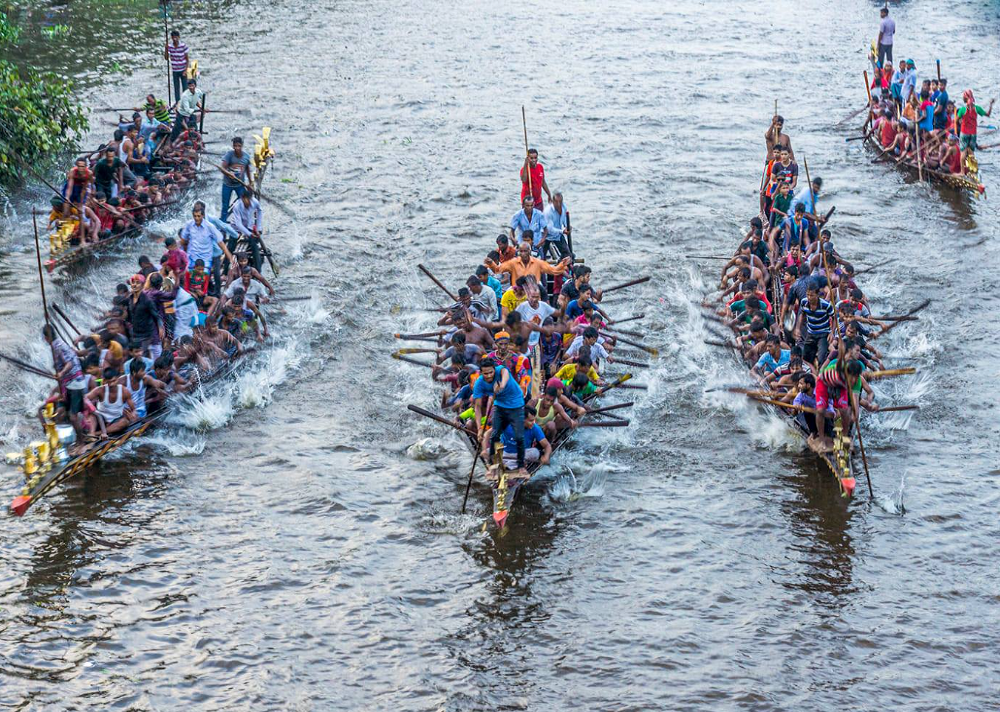
Nouka Baich – traditional boat racing – is among the most visually dramatic of all national games of bangladesh. Long, narrow vessels powered by dozens of synchronized rowers cut through river channels while thousands of spectators line both banks cheering with extraordinary intensity.
The races aren’t just athletic contests. They’re community events carrying deep social meaning – representing village pride, seasonal celebration, and collective identity compressed into minutes of breathtaking competition.
The Racing Crews: Teamwork at Its Rawest
What makes boat racing genuinely compelling as sport is its demand for perfect synchronization. A racing crew typically includes:
- 20 to 25 rowers working in complete rhythmic unison
- A lead drummer setting the stroke tempo from the bow
- A steerer managing direction through challenging river currents
- A team captain coordinating strategy before and during the race
Individual strength matters far less than collective timing. One rower breaking rhythm can cost the entire crew critical seconds. This dynamic makes boat racing one of the most team-dependent disciplines in all of sports in bangladesh.
Festival Roots, Competitive Future
Both Lathi Khela and boat racing evolved from festival traditions. Eid celebrations, harvest festivals, and Pohela Boishakh have historically provided the calendar structure around which these competitions are organized.
That festive context is a strength, not a limitation. It guarantees consistent participation, community investment, and emotional stakes that purely commercial sports sometimes struggle to generate. People don’t just watch these competitions – they feel personally connected to the outcomes.
Increasingly, sports authorities are exploring how to formalize these disciplines without stripping away the cultural character that makes them meaningful in the first place.
Preservation Meets Modernization
The tension between tradition and modernization is real. Younger generations raised on cricket, football, and esports sometimes engage with traditional sports only during major festivals. Sustaining genuine participation requires deliberate effort.
Bangladesh’s Ministry of Youth and Sports has acknowledged this challenge. Initiatives integrating traditional disciplines into school physical education curricula are showing early promise – introducing Lathi Khela and boat racing fundamentals to children who might otherwise encounter them only as spectators.
Why Traditional Sports Matter Now
In an era of globalized sport, the popular sports in bangladesh conversation risks becoming dominated entirely by international formats and foreign leagues. Traditional disciplines provide essential counterbalance.
They’re accessible – requiring minimal equipment and no expensive infrastructure. They’re inclusive – welcoming participants across age groups and economic backgrounds. And they’re authentically Bangladeshi in ways that no imported sport can replicate.
Lathi Khela and boat racing aren’t competing with cricket or football. They’re completing the picture – reminding Bangladesh and the world that this nation’s athletic identity runs deeper than any single sport ever could.
A Living Heritage
The national games of bangladesh aren’t museum exhibits. Every festival season, they come alive again with the same intensity that has characterized them for generations. New participants step forward. Old champions pass knowledge to younger hands.
That continuity is the real victory. Bangladesh’s traditional sports survive not because of institutional support alone, but because communities genuinely love them – and understand instinctively that some things are worth preserving exactly because they cannot be replicated anywhere else on earth.
