
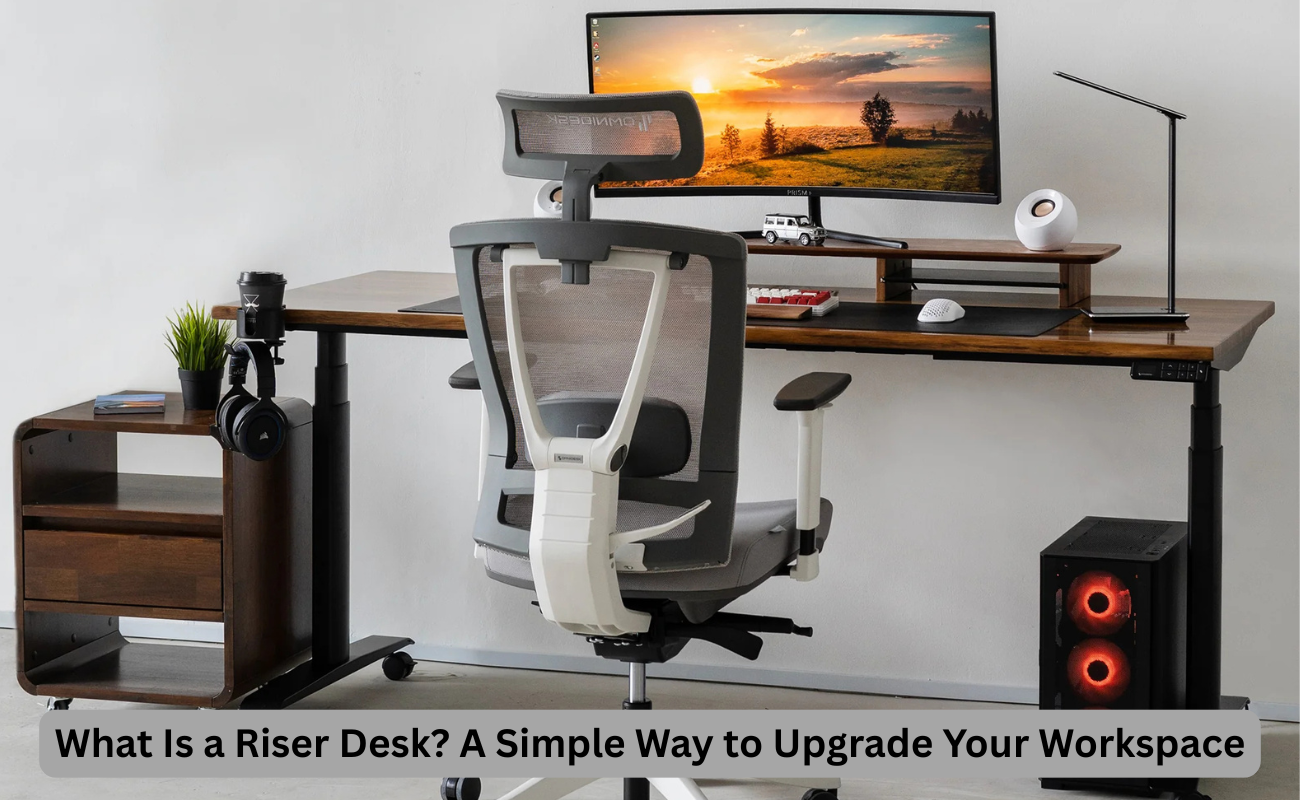
Most of us spend way too much time sitting. Hours at a desk can leave you with a sore back, bad posture, and even health problems down the road. People are waking up to this, and many are looking for easy fixes that don’t require buying a whole new office setup. That’s where a riser desk comes in.
So what is it exactly? A riser desk sits right on top of your existing desk. It lifts your monitor and keyboard up so you can stand while you work. Want to sit again? Just lower it back down. Your old desk stays put. Nothing complicated.
This guide walks you through what a riser desk is, how it works, the different kinds you can buy, and whether it’s worth the money. By the end, you’ll know if it makes sense for your setup.
The Basics of the Riser Desk
A riser desk goes by a few names — desk riser, standing desk converter, adjustable desk converter. Whatever you call it, it’s basically a platform that raises your screen and keyboard to standing height. Think of it as a mini desk that lives on top of your real desk.
You push it up when your back starts hurting. You drop it when your legs get tired. That’s it.
How It’s Different From a Full Standing Desk
A full standing desk replaces your entire desk. A riser desk just adds to what you already have. If you like your current desk or don’t want to spend a lot, a riser is the cheaper, simpler route.
What Makes Up a Good Riser Desk
Most riser desks have a few basic parts:
- A top shelf for your monitor
- A lower tray for your keyboard
- Some kind of lift system (gas spring, manual lever, or electric motor)
- A heavy base so it doesn’t wobble
Why People Use Them
The whole point is flexibility. You can stand for a while, then sit, then stand again. This back-and-forth keeps your body from getting stuck in one position all day.
Types of Riser Desks
Not all riser desks work the same way. Here’s how they break down
How They Move Up and Down
Gas Spring (Pneumatic)
These use a nitrogen-filled cylinder. You squeeze a lever and the desk glides up smoothly. No cords, no plugging in. Just lift and go.
Manual Lever or Locking Pin
These are the budget options. You pull a lever or move a pin to lock the height. They work fine, but you need a bit more muscle to adjust them.
Crank Handle
You turn a handle to raise or lower the platform. It gives you precise control, but it’s slower than the gas spring models.
Electric
Push a button and the motor does the work. Great if you switch positions a lot or have heavy equipment.
Different Designs
Single-Tier
One flat surface. Good if you just use a laptop and keep things minimal.
Dual-Tier
This is the most common setup. The top shelf holds your screen, the bottom tray holds your keyboard. Keeps everything at the right height.
Full-Width
Spans your whole desk. Perfect if you run two monitors side by side.
Electric with Memory Presets
Some electric models let you save your favorite sitting and standing heights. Hit a button and it moves to exactly where you want it.
| Type | Speed | Effort | Needs Power | Price |
| Gas Spring | Fast (2-3 sec) | Low | No | Mid |
| Manual | Medium | Medium to high | No | Low |
| Electric | Fast | None | Yes | High |
Read Aslo: Sparkpressfusion com Review: What It Is, Features & Is It Legit?
Why Bother? The Real Benefits
People don’t buy these things for fun. They buy them because sitting all day is rough on the body.
Your Health
Less Pain, Better Posture
Sitting puts way more pressure on your spine than standing. A riser desk gets your monitor up to eye level so you’re not hunched over. That “tech neck” you get from looking down at a screen? This helps fix it.
Burn a Few More Calories
Standing burns about 50 to 100 more calories per hour than sitting. Not a huge amount, but it adds up. There’s also research showing that standing for 30 minutes after lunch can cut blood sugar spikes by nearly half.
Break the Sitting Cycle
The real enemy isn’t sitting — it’s never moving. A riser desk lets you change position throughout the day, which keeps your muscles from locking up.
Getting More Done
Stay Alert
Standing gets your blood moving. More blood to the brain means less of that 3 PM crash where you can barely keep your eyes open.
The 20:8:2 Rule
Some ergonomic experts suggest this: sit for 20 minutes, stand for 8, walk around for 2. A riser desk makes switching between sitting and standing effortless.
Saving Space and Money
Frees Up Room
Lift your gear up and suddenly you have space underneath for notebooks, your phone, or whatever else was cluttering your desk.
Cheaper Than a New Desk
A decent standing desk can cost hundreds or even thousands. A riser desk gives you most of the same benefits for way less cash.
Who Should Get One?
Office Workers
Companies use these to upgrade cubicles fast. No need to rip out old furniture.
People Working From Home
If you’re using a dining table or an old desk that can’t be replaced, a riser desk turns it into a proper workstation.
Designers and Creatives
If you use heavy monitors or drawing tablets, a sturdy riser desk can handle the weight and keep your setup ergonomic.
Anyone With Back Problems
If you’re already dealing with pain, standing part of the day can make a real difference.
What to Check Before You Buy
Weight Limit
Most riser desks hold 30 to 35 pounds. If you’re putting two monitors on it, add up the weight and leave some breathing room. Don’t max it out.
Can You Add a Monitor Arm?
Some riser desks aren’t thick enough to clamp a monitor arm onto. Check this if you plan to use one.
Think Long-Term
If you’re happy with your current desk and want to save money, a riser is the way to go. If you need a huge work surface or want something built-in, you might eventually want a full standing desk.
Set It Up Right
Your monitor should sit at eye level. Your keyboard tray should let your elbows bend at about 90 degrees. Get this wrong and you’ll just trade one pain for another.
Where Are These Heading
Riser desks keep getting better. Here’s what’s coming:
Smarter Features
USB-C ports, wireless charging pads, and app controls that remember your exact heights.
Better Materials
More companies are using bamboo and recycled steel instead of plastic.
Built for Hybrid Work
Lightweight, portable models are showing up so you can take your setup from home to office and back.
Final Word
A riser desk is one of the easiest and most practical ways to improve your workday without tearing apart your entire office. You stand more, sit less, and stop torturing your back after years of hunching over a keyboard. The setup takes minutes, not hours, and you don’t need to be handy with tools to get it working.
When you’re picking one out, just keep a few things in mind. Make sure it can handle the weight of your monitor or monitors. So, use this method in your life to increase your productivity simply.
Read more: 5 Rules for Aligning Tax-Saving Investments with Section 11 Requirements for Charitable Trusts
