
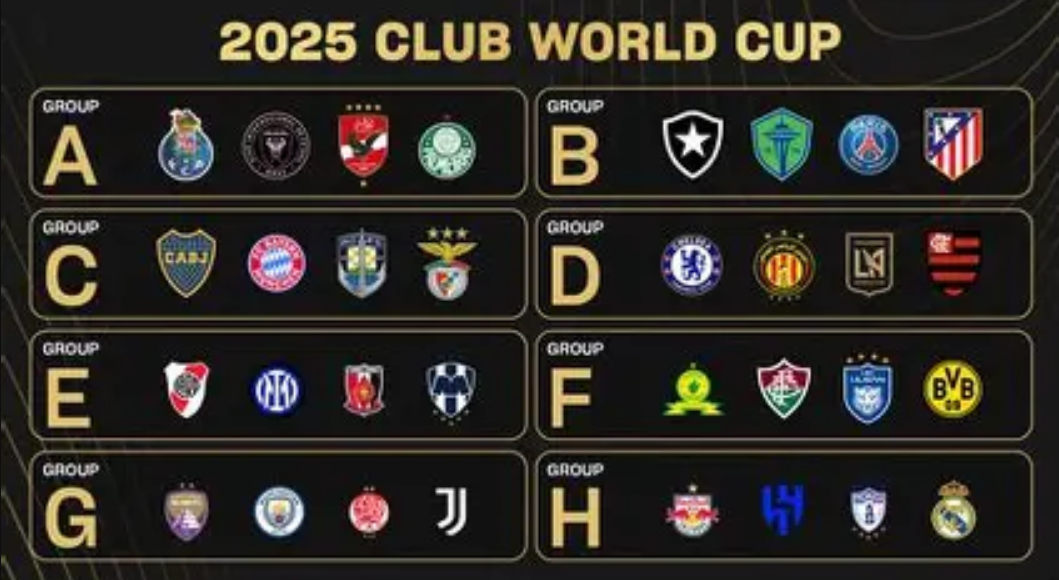
Club football’s ultimate question has always been contested informally — which team, from any league on the planet, is genuinely the best? The expanded FIFA Club World Cup is the most serious attempt yet to answer that question on the pitch rather than in conversation. Bringing together champions from every confederation across a proper tournament format, it represents a genuine shift in how global club football measures itself. Fans following every match with dedicated markets and live coverage can do so at Dbbet.
What Is the Expanded FIFA Club World Cup
The tournament underwent a fundamental restructuring for its 2025 edition, moving from a compact seven-team event held annually to a 32-team competition staged every four years in a format mirroring the FIFA World Cup itself. The expanded edition is hosted across the United States, with matches spread across major stadiums in cities including New York, Los Angeles, Miami, Seattle, and Atlanta. Group stage play gives every participating club at least three matches before the knockout rounds begin. The format change transforms the competition from a brief showcase into a genuine tournament where form, squad depth, and tactical adaptation across multiple matches determine the winner rather than a single knockout tie decided by fine margins.
FIFA Club World Cup Participating Teams: The Full Field
The FIFA Club World Cup participating teams represent the continental champion pathway from all six FIFA confederations. UEFA contributes the largest allocation — twelve clubs drawn from Champions League performance over a four-year cycle rather than solely the most recent winner. CONMEBOL sends six South American clubs, reflecting the continent’s historic strength in club competition. CAF, AFC, CONCACAF, and OFC contribute the remaining places through their respective continental championship structures. The result is a field that genuinely represents global club football — Brazilian giants alongside African champions, Asian powerhouses alongside Central American representatives. Real Madrid, Manchester City, Bayern Munich, Flamengo, River Plate, and Al Hilal are among the clubs whose participation defines the tournament’s competitive landscape.
FIFA Club World Cup Teams: The European Contingent
European clubs enter the FIFA Club World Cup teams conversation as heavy favorites by most objective measures. The UEFA allocation includes Real Madrid — the tournament’s most decorated club at any level — alongside Manchester City, Chelsea, Bayern Munich, Paris Saint-Germain, Inter Milan, Porto, Benfica, Juventus, Atlético Madrid, Borussia Dortmund, and RB Salzburg. The depth of European representation reflects both UEFA’s political weight within FIFA and the genuine competitive strength of Champions League football. Real Madrid arrive with the greatest global brand recognition and a squad built explicitly for multi-match tournament performance. Manchester City’s systematic approach under Pep Guardiola has produced the most complete squad in European football across recent seasons, making them the other primary European contender for the title.
South American Clubs: The Main Challengers
South American football’s relationship with European dominance has always carried competitive complexity — CONMEBOL clubs have historically performed above their seeding in FIFA Club World Cup editions, and the expanded format gives them more opportunity to demonstrate that the gap between European and South American club football is smaller than transfer market valuations suggest. Flamengo, River Plate, Fluminense, Palmeiras, Boca Juniors, and Atlético Mineiro represent a South American contingent capable of defeating any European opponent on a given match day. Brazilian clubs in particular arrive with squads whose technical quality and tactical sophistication have been sharpened by Copa Libertadores campaigns that demand consistent performance across home and away legs under intense atmospheric pressure.
FIFA Club World Cup Scores: Following the Tournament
FIFA Club World Cup scores across the group stage and knockout rounds have reflected the competitive reality that the format’s designers intended — genuine matches between strong clubs rather than the one-sided results that characterized earlier editions of the competition. European clubs have largely delivered the performances expected of them, but South American sides have consistently pushed favorites in ways that suggest the gap between the continents is closing. African and Asian representatives, while facing the steepest challenge in terms of squad depth and match intensity at this level, have demonstrated that continental championship preparation produces teams capable of competing for periods even against European elite opposition. Every match in the knockout rounds carries the drama of genuine consequence.
The Favorites: Who Can Win the Tournament
Real Madrid enter as the most credible favorites based on their Champions League pedigree, squad quality, and institutional experience of performing under maximum pressure in knockout football. Their ability to find results when performances are below their best — a characteristic that defines great tournament teams across all sports — makes them particularly dangerous in a format where a single bad day can end a campaign. Manchester City represent the primary alternative under a manager whose tactical preparation for specific opponents is unmatched in the modern game. Among non-European contenders, Flamengo’s attacking quality and Palmeiras’ structural solidity make them the most credible threats to European dominance. A South American finalist would represent a landmark result for the tournament’s credibility.
African and Asian Clubs: The Underdogs with Stories
The presence of clubs from CAF, AFC, and OFC confederations gives the FIFA Club World Cup genuine geographic breadth that no other competition can claim. Al Hilal from Saudi Arabia arrive with a squad that financial investment has transformed into one of the most expensive club rosters ever assembled — their player recruitment over recent seasons has attracted global attention and created real competitive questions about where they genuinely sit in the global hierarchy. African representatives bring physical intensity and tactical organization developed through demanding continental campaigns. These clubs may not be FIFA Club World Cup winner contenders in 2025, but their participation raises the tournament’s legitimacy and provides competitive benchmarks that help global football understand the true development gap between confederations.
Venues and the American Hosting Experience
Staging the expanded Club World Cup across American stadiums creates an interesting dynamic — neutral venues in a country where club football loyalty is still developing produce crowds that are genuinely mixed rather than partisan in the way European or South American settings would generate. MetLife Stadium in New Jersey, Rose Bowl in Pasadena, Hard Rock Stadium in Miami, and Lumen Field in Seattle all provide world-class broadcast infrastructure and spectator capacity that befits a competition of this scale. American soccer culture has grown substantially over the past decade, and the tournament’s presence accelerates that development by delivering the world’s greatest clubs to cities building their own football traditions. The hosting arrangement also reflects FIFA’s strategic investment in the American market ahead of the 2026 World Cup.
What a FIFA Club World Cup Winner Would Mean
The FIFA Club World Cup winner of the expanded tournament will earn a place in football history that previous editions — with their limited fields and compressed formats — could not credibly offer. Winning twelve matches against genuinely global opposition across a month-long tournament is a different achievement from the older format’s three or four games. For a European club, victory confirms continental dominance translates to global dominance — a claim that has always been assumed but never properly tested. For a South American club, victory would be the most significant result in the history of football outside of Europe and would reshape the global conversation about where the game’s true competitive center sits. The tournament’s expanded legitimacy means its first major winner carries a weight that no previous Club World Cup champion could claim.
