
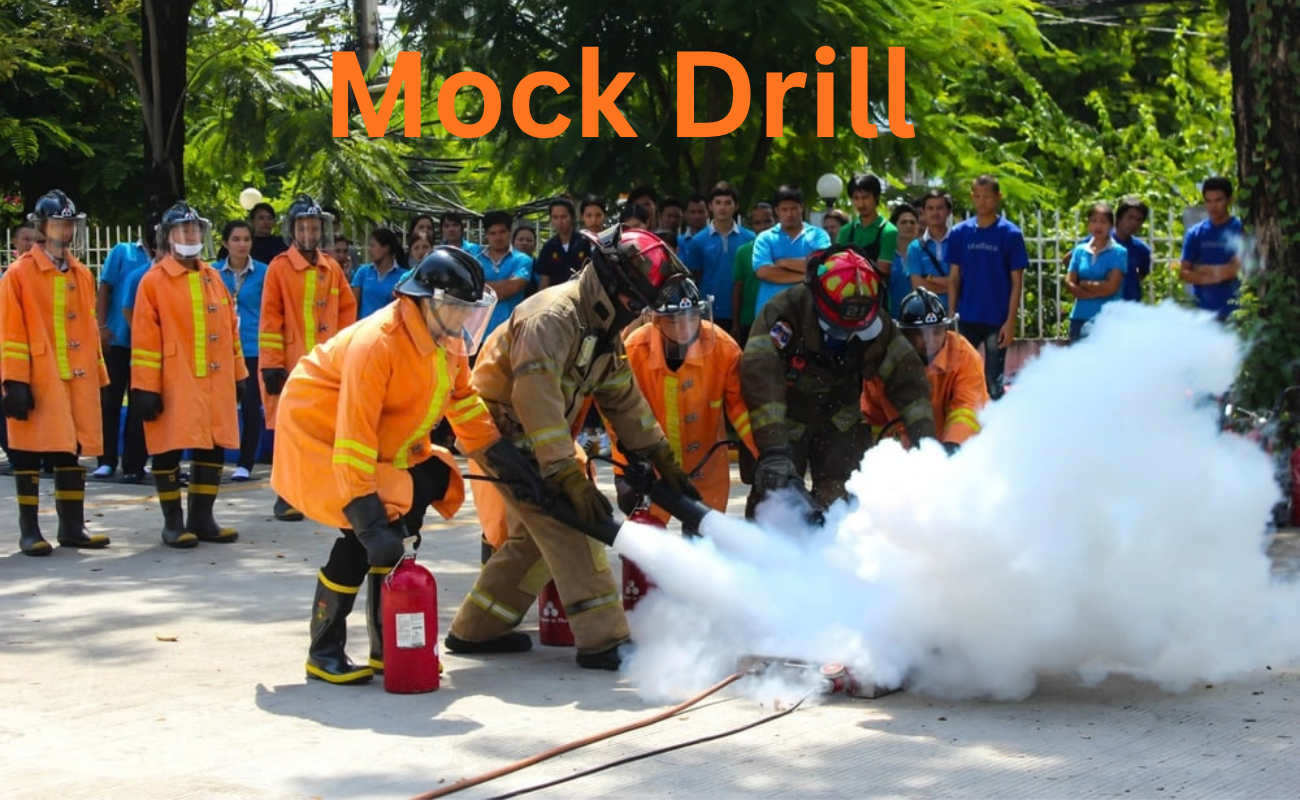
Have you ever been sitting in class or at your desk when a loud alarm suddenly blares? Everyone jumps up, lines up, and walks outside like they have done it a hundred times before. Then someone announces it was just a drill, and you all shuffle back in.
That, right there, was a mock drill. But have you ever stopped and wondered — why do we bother? What’s the real point of pretending something bad is happening?
Well, there is a solid reason behind it, and by the end of this guide, you will understand the full mock drill meaning and why organizations treat these practice runs so seriously. No complicated definitions. Just plain talk.
Mock Drill Meaning: The Simple Explanation
Here it is in the easiest way possible. The meaning of “mock” is fake, pretend. The definition of the word drill is: a practice exercise. So a mock drill is a practice of an emergency that everyone does on purpose.
It’s easy to say — you practise the bad thing before it is the bad thing. Just as football teams do when they practice penalties before a big game, or actors do before opening night. If the real moment happens, nobody freezes! Everyone is familiar with their own moves.
That is truly the essence of the mock drill meaning: make responding to a fire or an earthquake a habit, rather than, when it happens in real life, running around in circles not knowing what to do.
Why Mock Drills Matter So Much
Fair question — why all this fuss over a practice run? Here’s the truth:

- Fear makes people stupid. In a real emergency, your brain panics. But practiced responses become automatic. Your body just does what it has done before, even when your mind is racing.
- They expose problems you never noticed. A stuck exit door. A blocked staircase. A route nobody can find. Drills reveal these dangers before lives actually depend on them.
- Speed matters more than you think. When every second counts, people who have drilled evacuate in minutes. People who haven’t? It turns into chaos fast.
- It’s the law in most places. Schools, factories, hospitals, and big offices are usually required to run mock drills regularly. It’s not optional — it’s safety policy.
So no, it’s not just a formality. It is preparation that quietly protects everyone.
Read Also: Recently Followed on Instagram: How to Check Who Someone Followed
The Common Types of Mock Drills
Not every drill is the same. Different places practice for different dangers. Here are the ones you will see most often:
Fire drills — the classic one. The alarm rings, everyone exits, and headcounts happen at the assembly point.
Earthquake drills — people practice “drop, cover, and hold on” under sturdy furniture.
Evacuation drills — focused purely on getting out of the building fast through the right routes.
Lockdown drills — mostly in schools, these prepare everyone for threats inside the building.
Disaster drills — bigger exercises for floods, storms, or chemical emergencies, often run with local authorities involved.
How a Mock Drill Actually Works Step by Step
Curious what happens behind the scenes? Here’s how most drills unfold:
- The planning — officials choose the scenario and assign people to watch and time everything.
- The surprise alarm — nobody knows the exact moment it will start. That’s on purpose, so the reaction stays real.
- The response — everyone follows the procedure. Exit, take cover, or shelter in place, depending on the drill.
- The headcount — at the assembly point, leaders count everyone to make sure nobody is missing.
- The review — the team discusses what went smoothly and what went wrong. Timings, bottlenecks, confusion — everything gets noted.
- The fixes — problems get solved before the next drill rolls around.
Honestly? A good drill feels almost boring. And that is exactly what you want. Boring means smooth. Smooth means safe.
A Real-Life Example to Make It Clear
Picture a school in an earthquake zone. Mid-lesson, the bell suddenly blares. Without hesitation, students duck under desks, cover their heads, and hold on tight. When the signal sounds again, they file out in single lines and gather at the playground. Teachers count heads. Four minutes total. Done.
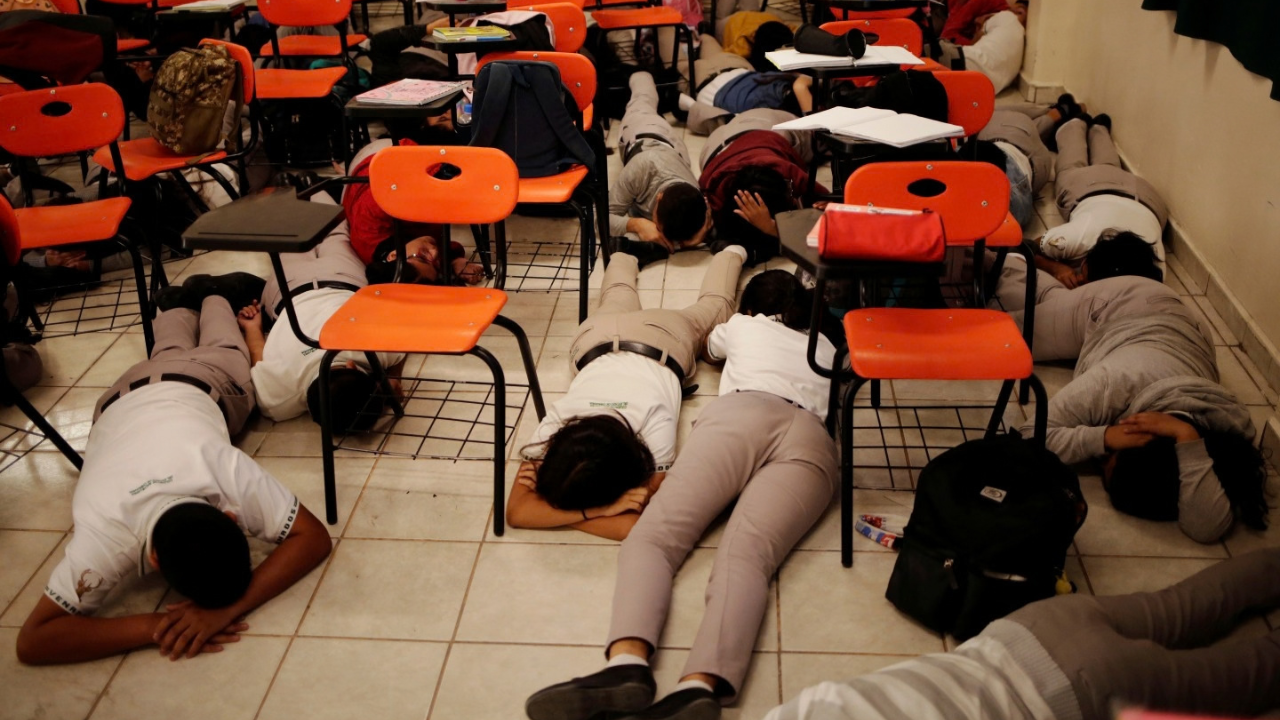
Now picture that same school with zero practice. Kids freeze. They crowd the doors. Some run the wrong way. Teachers shout over the noise. That small difference — calm order versus blind panic — is exactly why mock drills exist.
Mistakes People Make During Mock Drills (Don’t Do These)
Even in practice, people slip into bad habits. These would be dangerous in a real emergency:
- Treating it like a joke. Laughing and chatting might feel harmless, but it ruins the training for everyone.
- Ignoring the alarm. “It’s just a drill” is the wrong mindset. In a real fire, that same hesitation could be deadly.
- Taking shortcuts. Always use your assigned exit, even if another one looks faster.
- Skipping the headcount. Assembly points exist to catch missing people. Walking off early defeats the whole point.
- Blowing off the feedback. The review session is where real improvement happens. Pay attention.
Final Word
Mock drills can feel annoying — interrupting your day, making you stand outside in the sun, waiting for the all-clear. Nobody loves them.
But here is the thing about the mock drill meaning that most people miss: it is not really about the drill at all. It is about the day you hope never comes. The day when that alarm is not fake, when the smoke is real, when seconds matter. On that day, every single practice run pays off.
So next time the alarm goes off, don’t roll your eyes. Move fast, take it seriously, and be glad you know exactly what to do. Someone, somewhere, planned that drill to keep you alive.
Read More: Client Relationship Partner: Role, Responsibilities, Salary & Career Guide
