
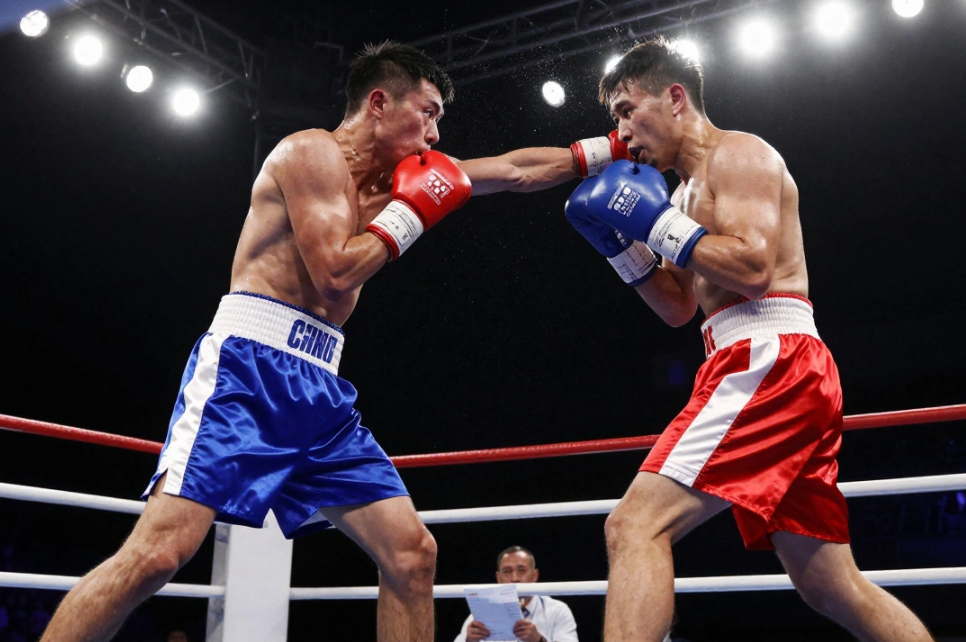
Boxing strips competition to its most essential form. Two people, equivalent rules, a defined space, and the singular objective of landing punches while avoiding them. No teammates to compensate for individual limitations. No equipment advantages that financial resources can manufacture. Just technical skill, physical conditioning, mental resilience, and the specific courage that standing in front of another trained fighter requires regardless of preparation quality or competitive experience level.
dbbet nigeria follows boxing with genuine analytical investment across African and global markets — recognizing that understanding boxing matches, how long are boxing matches, how many rounds in boxing, and the foundational rules that govern the sport provides the essential framework for appreciating one of humanity’s oldest and most culturally significant competitive disciplines.
What Boxing Actually Is
Boxing is a combat sport in which two competitors throw punches at each other within a defined ring, governed by rules that prohibit strikes below the belt, strikes to the back of the head, and various holding and wrestling techniques that would transform the competition into something other than the striking-specific discipline boxing’s rules intend to create.
The sport’s objective involves either stopping the opponent through knockout or accumulated damage, or accumulating more scoring punches across the fight’s duration to win judges’ decisions when neither fighter achieves a stoppage. This dual pathway to victory creates the strategic complexity that makes boxing genuinely interesting beyond its surface violence — fighters deciding when to pursue knockouts versus when to accumulate points through technical striking exchanges.
Modern professional boxing operates under multiple sanctioning bodies — WBC, WBA, IBF, and WBO — each recognizing champions across seventeen weight divisions, creating the complex championship landscape that serious boxing engagement requires understanding to navigate accurately.
How Many Rounds in Boxing 🥊
The answer to how many rounds in boxing varies significantly across competition levels, sanctioning bodies, and the specific competitive context determining format selection. Professional championship fights — the highest-profile boxing matches generating mainstream attention — use twelve rounds as the standard format, established universally after the tragic death of Duk Koo Kim in a 1982 fifteen-round title fight prompted safety-motivated format reduction.
Non-championship professional fights typically use eight or ten rounds — providing competitive experience for developing fighters without demanding the complete physical and tactical endurance that twelve-round championship distance requires from participants whose professional development remains ongoing.
Amateur boxing — the Olympic pathway — uses three rounds of three minutes each for men and four rounds of two minutes each for women, creating dramatically shorter competitive formats whose scoring systems and competitive objectives differ meaningfully from professional boxing’s damage-accumulation model.
How Long Are Boxing Matches ⏱️
Understanding how long are boxing matches requires distinguishing between official round time and actual elapsed competition duration. Professional rounds last three minutes with one-minute rest intervals between them — creating a twelve-round championship fight’s official timeline of 47 minutes combining 36 minutes of fighting and 11 minutes of rest.
Actual elapsed time extends considerably beyond official timelines through ring walks, pre-fight ceremonies, judge introduction procedures, and the broadcast requirements that commercially significant fights incorporate.
Major championship fights between established stars frequently require three to four hours of total broadcast time despite the 47-minute official framework — the pre-fight production often consuming more time than the actual competition.
Fights ending before the distance through knockouts or stoppages reduce actual competitive duration dramatically — some championship fights concluding within the first round despite their official twelve-round framework, creating the fundamental unpredictability that makes boxing genuinely compelling as entertainment despite format familiarity.
The Round Structure: What Happens Inside Three Minutes
Three minutes of professional boxing contains far more tactical complexity than its brief duration suggests. Fighters implement game plans established through weeks of preparation — specific punch combinations, defensive techniques against identified opponent tendencies, and the physical output management that distributing effort across twelve rounds requires.
The first round typically involves mutual assessment — fighters gathering information about opponent timing, defensive habits, and punch selection patterns that training camp preparation couldn’t fully reveal. Experienced fighters exploit this assessment period strategically — deliberately showing tendencies they intend to counter later while gathering intelligence about opponent reactions.
Middle rounds frequently determine fight outcomes through accumulated damage and psychological momentum shifts that neither knockout nor point accumulation fully captures. A fighter who dominates middle rounds through effective body work — landing liver shots whose damage compounds across rounds — can manufacture late-round stoppages that the scorecards’ round-by-round accounting doesn’t predict until the accumulated damage creates sudden performance collapse.
Scoring: How Judges Evaluate Boxing Matches 📊
Professional boxing uses the ten-point must system — the round winner receiving ten points, the loser receiving nine or fewer depending on knockdowns and dominant performance differentials. Three judges scoring independently create the panel whose majority decision determines winners when fights reach their scheduled distance without stoppage.
Judging criteria prioritize clean punching — punches landing on legal target areas with visible impact — over defensive activity, aggression, and ring generalship. These secondary criteria influence scores when punch output and clean landing frequency are relatively equal between competitors, creating subjective assessment dimensions that generate the judging controversy that boxing’s decision system regularly produces.
Knockdowns automatically reduce the floored fighter’s round score by one point — reflecting both the immediate competitive disadvantage the knockdown represents and the accumulated damage that causing a fighter’s legs to fail communicates beyond the single punch that produced the fall.
Weight Divisions: The Framework 🏋️
Boxing’s seventeen professional weight divisions — from minimumweight’s 105-pound limit through heavyweight’s unlimited upper boundary — create the competitive framework within which fair physical matchups are organized and championship hierarchies are established. Weight divisions exist because physical size differences in boxing create advantages so significant that competition without weight organization would systematically reward size rather than skill.
The weight cutting practices that allow fighters to compete below their natural walking weight — rehydrating between weigh-in and fight to compete significantly above division limits — represent a persistent competitive and safety issue that sanctioning bodies have addressed through same-day or next-day weigh-ins for certain competitions without fully resolving the underlying incentive structures that make aggressive cutting financially rewarding.
Heavyweight boxing commands the greatest mainstream commercial attention despite containing some of boxing’s least technically refined competition — public fascination with the unlimited division reflecting cultural weight attached to physical dominance that smaller weight class technical excellence rarely generates equivalently in mainstream consciousness.
The Corner: Boxing’s Support System
Between rounds, fighters return to their corners where training teams perform multiple simultaneous functions within the sixty-second rest interval whose brevity makes prioritization essential. Cut men treat facial wounds that bleeding could cause referees to stop fights. Trainers provide tactical adjustments addressing identified competitive problems. Water and hydration management maintains physical capacity across extended fight durations.
The corner’s quality frequently determines fight outcomes independent of the fighters’ own physical capabilities — tactical adjustments made between rounds that shift competitive momentum, cut treatment that keeps fighters competitive through injury, and the specific psychological management that maintains focus and confidence through rounds where opponent success has created doubt.
Trainers’ ability to stop fights by throwing in the towel — acknowledging that continuation serves no competitive purpose and risks unnecessary damage — represents one of boxing’s most important safety mechanisms. The judgment involved in this decision — balancing competitive opportunity against damage accumulation risk — represents one of professional boxing’s most consequential ongoing responsibilities.
Amateur vs Professional Boxing
The distinction between amateur and professional boxing extends beyond payment structures into fundamental differences in competitive objectives, protective equipment requirements, and the specific skills each format rewards most completely.
Amateur boxing’s headgear requirement — mandatory at most amateur levels though removed from Olympic competition since 2016 — and shorter round formats create competitive environments where hand speed and punch volume accumulate scoring more effectively than the power and damage-accumulation that professional boxing’s longer formats reward. This difference produces stylistic tendencies that explain why some technically excellent amateur boxers struggle adapting to professional formats that reward different tactical approaches.
The Olympic pathway — amateur competition providing qualification for the Games — creates parallel career streams where some fighters prioritize Olympic participation over early professional development, accepting delayed financial returns in exchange for the specific competitive experience and exposure that Olympic boxing provides.
Nigeria’s Boxing Culture 🌍
Nigeria has produced boxing champions whose competitive quality and cultural impact deserve specific acknowledgment within any serious examination of the sport’s global landscape. Dick Tiger’s middleweight and light heavyweight world championships in the 1960s established Nigerian boxing’s international credibility during a period when African fighters faced specific barriers to recognition that talent alone couldn’t always overcome.
Contemporary Nigerian boxing continues producing competitive talent whose international ambitions reflect both individual athletic quality and the specific cultural relationship with boxing that West African sporting traditions maintain. The sport’s accessibility — requiring minimal equipment and no specialized infrastructure for foundational development — creates genuine grassroots pathways in Nigerian communities where sporting investment produces boxing talent through cultural enthusiasm rather than requiring expensive institutional frameworks.
The Future of Boxing
Boxing’s commercial and competitive landscape continues evolving through the specific tension between traditional sanctioning body structures and the promotional models that generate the biggest fights and highest commercial returns. The undisputed championship model — single fighters holding all major organizational belts simultaneously — has become the competitive achievement that fans and promoters most consistently pursue, cutting through the organizational complexity that multiple simultaneous champions in each division creates.
Understanding how long are boxing matches, how many rounds in boxing, and the foundational rules that govern competition provides the structural knowledge that transforms casual interest into genuine boxing engagement. The sport rewards that deeper understanding with competitive narratives rich enough to sustain long-term passionate investment across the careers of its greatest practitioners — from first professional appearance through championship campaigns that define legacies measured in cultural impact as much as official records.
