
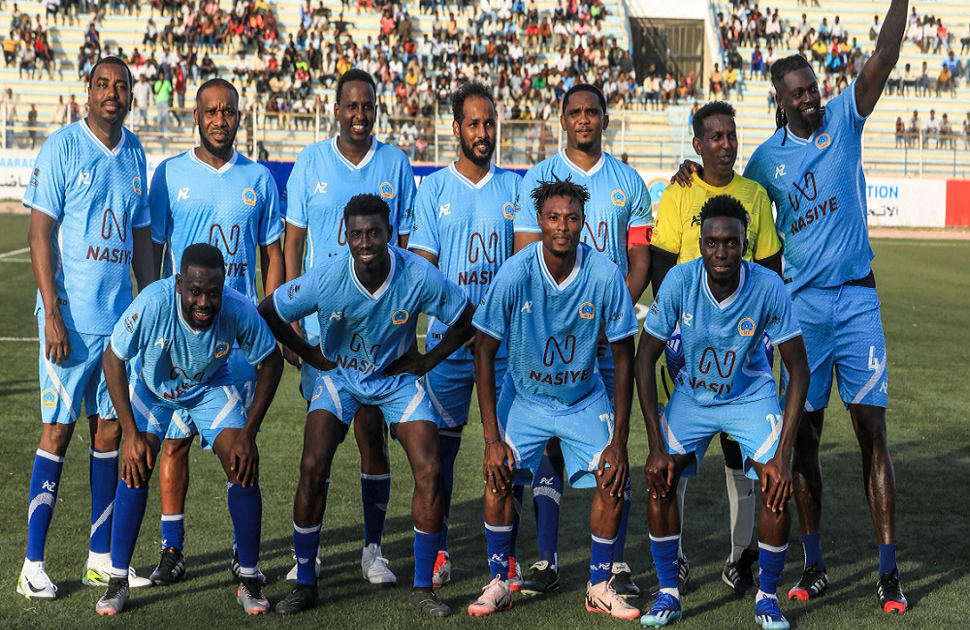
A stadium is never just a building. It’s a gathering point for collective emotion, a physical declaration that sport matters here,
space where individual performances become shared memories that communities carry forward across generations. In Mogadishu, this truth carries particular resonance — because football and the spaces where it’s played represent something genuinely essential to the city’s ongoing story of reconstruction and renewal.
db bet follows the development of African football infrastructure with genuine appreciation for what facilities mean beyond their physical dimensions. The relationship between Mogadishu stadium development, somalia national football team standings, and the players carrying Somali football forward represents one of African sport’s most compelling ongoing narratives. Understanding all three elements together provides the most complete picture of where Somali football currently stands and where it’s realistically heading.
Mogadishu Stadium: History and Significance 🏟️
The Banadir Stadium in Mogadishu carries decades of football history within its structure. Built during an earlier era of Somali institutional development, it has witnessed the full arc of the country’s complex recent history — functioning as a sporting venue during stable periods, falling dormant during conflict, and gradually returning to football purposes as security conditions improved across the capital.
Capacity figures place the venue among East Africa’s larger football stadiums — capable of hosting tens of thousands of supporters when fully operational. That capacity matters for atmosphere generation, for revenue potential, and for the signal it sends to visiting teams and football administrators about Somalia’s seriousness as a football nation worthy of genuine competitive respect.
Renovation work supported through FIFA development funding has addressed infrastructure elements that decades of limited maintenance had compromised. Pitch quality improvements, facility upgrades, and security enhancements have progressively restored the venue toward genuine international standard — a process still ongoing but clearly directionally positive.
The Stadium’s Role in National Team Development
Home advantage in football is real and measurable. Teams competing in familiar environments before passionate home supporters consistently outperform their away performances — a phenomenon that applies across every competitive level from village leagues to World Cup finals.
For the somalia national football team, establishing Mogadishu stadium as a genuine home fortress represents a significant developmental priority. International matches played in Mogadishu expose visiting teams to atmospheric conditions, pitch characteristics, and crowd intensity that away sides find genuinely challenging to prepare for adequately.
Building a home record that reflects this advantage — making Mogadishu a venue that regional opponents approach with genuine caution rather than quiet confidence — creates competitive value that coaching and individual talent improvements alone cannot manufacture. Home fortress status compounds over time as the reputation for difficulty becomes self-reinforcing.
Current FIFA World Rankings Context
Somalia’s current FIFA rankings position reflects the honest reality of competitive development against established African football nations with significantly longer uninterrupted development histories. Rankings in the lower sections of African football standings represent genuine assessment rather than unfair judgment — the gap between Somalia’s current capability and continental football’s competitive mainstream is real and acknowledged within Somali football’s own development conversations.
The somalia national football team standings trajectory across recent FIFA ranking cycles tells a more encouraging story than any single position captures. Consistent participation in qualification campaigns, CECAFA regional competitions, and friendly internationals generates ranking points that gradual improvement converts into upward movement across extended timeframes.
Football rankings reward consistency above almost everything else — consistent participation, consistent competitive performance, consistent improvement across multiple competition cycles. Somalia’s federation understands this and is building the competitive calendar structures that generate consistent ranking activity.
Key Players Shaping the National Team 🌟
The somalia national football team players currently representing the country combine locally developed talent with diaspora-raised athletes whose football formation happened in European and North American youth systems.
Abdulkadir Abdi has emerged as one of the most technically accomplished players in the current squad — combining the technical foundation built through Swedish football development with genuine commitment to the Somali national team project. His ability to operate in tight spaces and connect play between midfield and attack reflects UEFA youth system development at its most effective.
Mohamed Roble brings physical presence and aerial capability that the national team’s defensive and attacking set-piece situations benefit from considerably. Developed through the domestic Somali league system before attracting attention from clubs in stronger regional leagues, his trajectory represents exactly the development pathway that investment in domestic competition quality is designed to create.
The goalkeeping position has shown particular improvement in recent squad selections — with technically competent options available that give the coaching staff genuine selection decisions rather than simply fielding whoever is available.
The Diaspora Players: Technical Quality Meets Heritage
Understanding somalia national football team players requires engaging seriously with the diaspora dimension that makes Somali football genuinely distinctive among African nations. Players raised in Scandinavian, British, and North American football systems bring technical qualities and physical development standards that expand what the national team can tactically attempt.
This diaspora talent pool continues growing as second-generation Somali communities across Europe and North America produce athletes who have benefited from world-class youth development infrastructure while maintaining genuine connection to Somali heritage and identity.
The integration challenge — building genuine team cohesion between players whose football formation happened in radically different environments — represents one of the technical staff’s most interesting ongoing management responsibilities. When integration succeeds, the combination of technical sophistication and local knowledge creates something more capable than either element produces independently.
Coaching Structure and Tactical Approach
The national team’s coaching infrastructure has improved considerably through federation investment in qualified technical staff. Head coaching appointments have increasingly prioritized candidates combining tactical knowledge with genuine understanding of Somali football’s specific developmental context — recognizing that approaches effective in stable football environments require adaptation when applied to Somalia’s particular circumstances.
Tactical organization has visibly improved across recent competitive appearances. Defensive structure shows greater coherence. Transitions between defensive and attacking phases demonstrate better coordination. Set-piece routines reflect genuine coaching preparation rather than improvised responses to match situations.
These improvements don’t yet translate consistently into competitive results against established regional opponents — but they represent the foundational tactical development that eventually does produce measurable results when sustained across multiple squad generations.
CECAFA Standings and Regional Position 🌍
Within CECAFA regional competition, Somalia’s standings reflect genuine improvement across recent tournament cycles. Results against Kenya, Uganda, Tanzania, and Ethiopia — nations with significantly longer uninterrupted football development histories — have become more competitive even when final outcomes haven’t shifted dramatically.
Goal differences have narrowed. Individual performances have attracted attention from regional football observers. Tactical approaches have demonstrated sophistication that surprised opponents accustomed to more straightforward Somali defensive setups from earlier competition cycles.
CECAFA standings don’t generate global attention. But within East African football’s developmental ecosystem, improving regional standing represents exactly the measurable progress that serious long-term development requires as its foundation before continental ambitions become realistic targets.
Infrastructure Beyond the Stadium
Mogadishu stadium anchors a broader football infrastructure network that the federation is gradually building across the capital and into regional centers. Training facilities, artificial pitches in secondary cities, and youth development centers collectively create the ecosystem that national team improvement requires at its foundation.
Hargeisa in Somaliland has developed its own football infrastructure — creating regional competitive depth that ultimately feeds into the national talent pool available to senior team selectors. This geographic distribution of football development matters enormously for long-term talent identification — ensuring that exceptional players from outside Mogadishu have developmental pathways rather than geographic accident determining who reaches national team consideration.
What the Numbers Don’t Capture
Somalia national football team standings and ranking positions tell part of the story. They don’t capture what it means for young Somalis to watch their national team compete internationally — to see their country represented in continental competition, to have football heroes whose jerseys they can wear with genuine pride.
They don’t capture the developmental significance of matches played at Mogadishu stadium before home crowds — the community gathering, the collective emotional experience, the normalcy that competitive football represents for a city that has fought hard for exactly that normalcy across recent decades.
These immeasurable dimensions of football’s meaning in Somalia context explain why development investment continues despite results that purely analytical observers might consider insufficient justification for sustained commitment. Football here serves purposes that transcend competitive outcomes — and understanding those purposes is essential for honestly appreciating what the somalia national football team represents beyond its current standings position.
The Path Forward
Mogadishu stadium will host more international matches. Somalia national football team players will improve as development systems mature. Standings will gradually reflect the competitive progress that patient, systematic investment is already generating within the ecosystem.
The timeline is measured in years and decades rather than seasons. The ambitions are genuine rather than performative. And the foundation being built — through stadium development, player identification, coaching improvement, and youth development investment — is more solid than external perceptions of Somali football typically acknowledge.
The game continues in Mogadishu. That itself remains the most important fact of all.
