
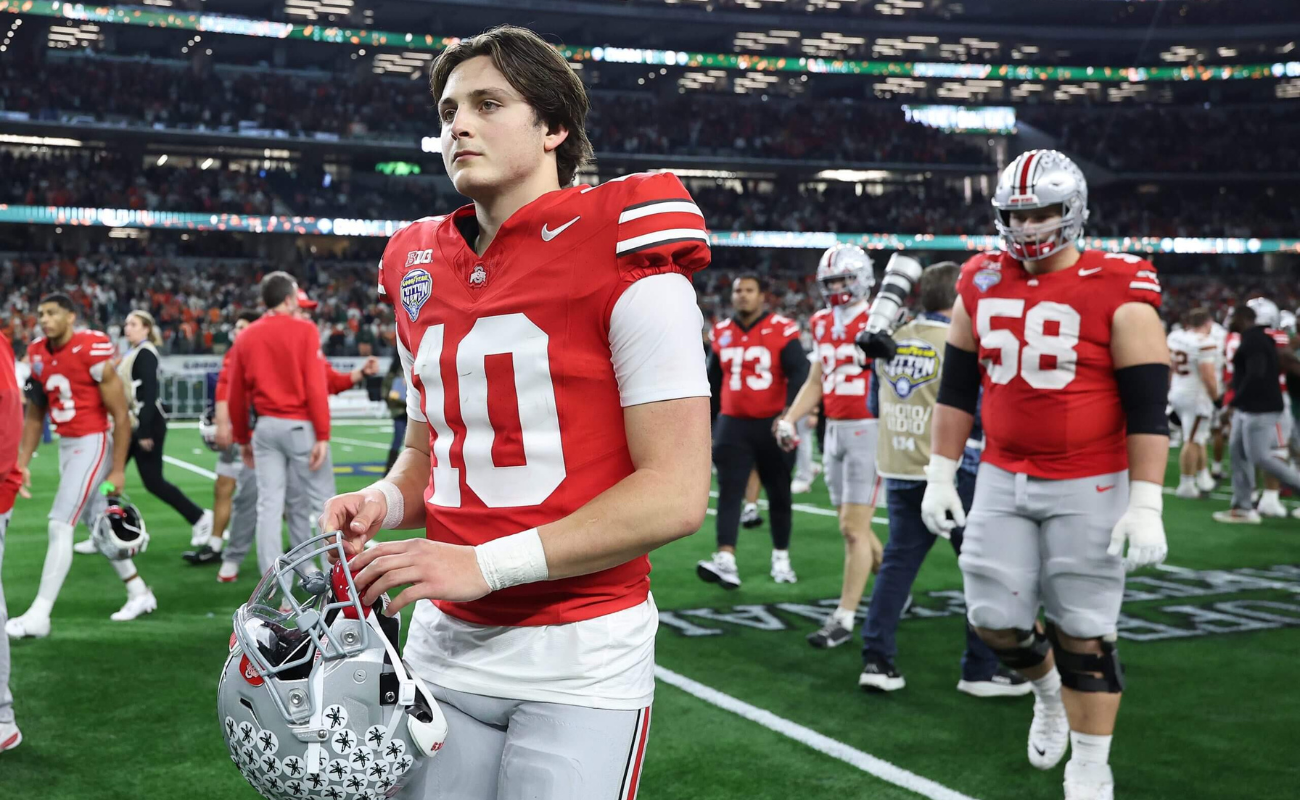
College football generates passions that professional sports rarely replicate with equivalent intensity. The specific combination of institutional loyalty, regional identity, and the particular emotional investment that comes from supporting a university — an identity that alumni, students, and community members share across generations — creates sporting cultures whose depth professional franchises, built on commercial rather than educational foundations, struggle to match. Ohio State Buckeyes football represents this phenomenon at its most complete — a program whose combination of sustained excellence, cultural significance, and NFL talent production has made it one of college football’s most consequential institutional forces across the sport’s entire modern history.
Dbbet follows college football with genuine analytical investment — recognizing that understanding ohio state buckeyes football’s competitive identity, what ohio state represents within college football’s broader landscape, and how the program’s records and player development create sustained relevance provides essential context for appreciating one of American sport’s most compelling ongoing competitive stories.
The Ohio State Identity
Understanding ohio state buckeyes football requires engaging with what the program represents within Ohio’s specific cultural geography — a state without NFL football in its major cities until relatively recently, whose college football loyalty consequently developed with an intensity that markets with professional competition sometimes dilutes. Columbus isn’t simply a college football city. It’s a city whose identity is substantially organized around Ohio State football in ways that outsiders occasionally find difficult to comprehend until experiencing gameday atmosphere firsthand.
Ohio Stadium — the Horseshoe — seats over 100,000 people whose collective noise, scarlet and gray visual unity, and particular emotional investment creates one of college football’s most intimidating environments for visiting teams whose preparation for the specific sensory experience that 100,000 passionate Ohio State fans generate cannot be fully replicated through any practice environment or mental preparation framework.
This home environment creates genuine competitive advantages that the program’s coaching staff consistently identifies as meaningful — not simply inspiring for home players but specifically challenging for visitors whose performance levels objectively decline against the specific atmospheric conditions that Ohio State’s home games produce.
The Program’s Historical Foundation 🏛️
Ohio State’s football history spans over a century of competitive development — producing traditions, rivalries, and championship moments whose accumulated weight creates the specific institutional gravity that genuinely historic programs carry into every competitive season regardless of current roster composition or coaching staff configuration.
Eight national championships across the program’s history — with the most recent arrivals coming under Urban Meyer’s coaching tenure — establish championship credentials that recruiting pitches legitimately deploy as evidence of genuine organizational excellence rather than aspirational marketing. Players who join programs with documented championship histories join environments where winning has been demonstrated as achievable rather than promised as theoretical possibility.
Woody Hayes’s coaching legacy — spanning the 1950s through 1970s — established the specific competitive identity around physical, disciplined football that Ohio State’s culture maintained across subsequent coaching generations despite tactical evolution that the sport’s development required. The specific emphasis on lineman excellence, physical dominance, and the particular brand of football that midwest sensibility values created program identity that recruiting has consistently reinforced across decades of talent acquisition prioritizing specific player profiles.
Urban Meyer’s Dynasty 🏆
The Urban Meyer era at Ohio State — spanning 2012 through 2018 — represents the program’s most recent championship peak, producing the 2014 national championship that validated his specific coaching approach within the college football landscape’s most competitive tier.
Meyer’s specific coaching contribution involved transforming Ohio State’s offensive identity — transitioning from the power-running traditional approach that previous eras emphasized toward the spread concepts and quarterback-centric systems that modern college football’s competitive balance demands. This philosophical evolution required recruiting different player profiles while maintaining the defensive excellence and physical program identity that Ohio State’s competitive culture had historically rewarded.
His player development legacy extends beyond his coaching tenure through the extraordinary NFL Draft production that his recruiting classes and development systems produced — players whose professional careers validate the specific preparation quality that Ohio State’s program provided rather than simply reflecting the natural talent that elite recruiting inevitably accumulates at programs whose national reputation attracts the country’s best prospects.
Ryan Day and Continued Excellence
Ryan Day’s succession of Meyer’s program — managing the specific transition challenge of replacing a legendary coach without experiencing the competitive decline that such transitions frequently produce — has demonstrated organizational depth whose consistency reflects institutional excellence beyond individual coaching dependence.
Day’s offensive sophistication — building on the spread concepts that Meyer introduced while adding specific passing game complexity — has maintained Ohio State’s position among college football’s elite offensive programs despite the personnel turnover that annual player departures create. His quarterback development specifically has produced NFL-caliber passers at rates that validate the specific coaching investment in the position that Ohio State’s system prioritizes.
His Big Ten championship consistency alongside College Football Playoff appearances has maintained competitive standards that Ohio State’s program history demands as baseline expectation — regular season excellence whose playoff implications annually position the Buckeyes among the sport’s genuine championship contenders regardless of specific roster composition challenges that any given season creates.
Key Players: The NFL Pipeline 🌟
Ohio State’s specific distinction within college football involves the extraordinary volume and quality of NFL talent that the program consistently produces — a pipeline whose output has established the Buckeyes as perhaps the most reliable NFL talent producer in college football’s entire landscape.
The wide receiver development specifically has generated remarkable NFL Draft results — a receiver room whose collective talent at any given moment frequently exceeds entire conference rosters’ collective receiving quality. The specific combination of elite recruiting targeting receiver prospects whose physical profiles and route-running ability project to professional success, combined with the specific coaching and scheme that allows receivers to demonstrate NFL-relevant skills, creates a development environment that receiver-focused recruiting sells honestly rather than aspirationally.
Defensive back production — cornerbacks and safeties whose Ohio State experience develops the specific press-man coverage skills and aggressive ball production that NFL teams specifically seek — has been equally consistent, multiple Ohio State defensive backs being selected in first and second rounds of consecutive NFL Drafts reflecting development quality rather than simply talent accumulation.
The Rivalry: Michigan vs Ohio State ⚔️
No examination of ohio state buckeyes football is complete without serious engagement with The Game — the annual Ohio State versus Michigan rivalry whose specific cultural weight within both programs and their respective supporter communities creates the specific competitive context that makes every other game feel like preparation for this singular encounter.
The rivalry’s specific intensity reflects genuine historical competitive balance — both programs producing legitimate national championship contenders across multiple eras, the competitive outcomes genuinely determining Big Ten championships and College Football Playoff positioning rather than being predetermined by consistent competitive hierarchy. Games decided by single scores in the sport’s most hostile environments, with implications extending across entire college football seasons, create the specific dramatic weight that genuine rivalry requires.
Ohio State’s recent dominance within the series has created specific motivational dynamics — Michigan’s breakthrough victories carrying disproportionate celebration weight reflecting accumulated frustration, while Ohio State losses generate genuine organizational examination rather than simply representing competitive results that records absorb without significant reflection.
College Football Playoff Positioning
Ohio State’s consistent College Football Playoff presence reflects the specific combination of recruiting quality, coaching sophistication, and program culture that sustains championship contention across different roster generations — a consistency that genuinely elite programs demonstrate while programs whose competitive peaks reflect specific personnel clustering struggle to maintain across talent turnover cycles.
The expanded College Football Playoff format — increasing from four to twelve teams — creates both opportunity and challenge for Ohio State’s competitive positioning. More available playoff spots potentially make qualification easier for programs whose strong regular seasons occasionally ended in exclusion under the four-team format. Simultaneously, more playoff rounds create additional elimination opportunities that talent depth and coaching quality must navigate successfully.
Ohio State’s specific playoff performances — victories and defeats whose circumstances reveal genuine competitive quality under maximum pressure — provide honest assessment of where the program sits within college football’s absolute competitive elite rather than simply within the Big Ten’s more manageable competitive hierarchy.
Recruiting: The Foundation 📋
Ohio State’s sustained competitive excellence rests on recruiting infrastructure whose consistent production of top-five national classes reflects the specific combination of factors that elite recruiting requires simultaneously — brand strength, facility quality, coaching credibility, development track record, and the particular geographic advantages that Ohio State’s location within the midwest’s football-rich talent corridor provides.
The Ohio pipeline — local talent whose proximity creates natural recruiting connections before national programs’ attention arrives — provides foundational roster depth that recruiting classes supplement with nationally recruited prospects whose talent elevates the program beyond what in-state talent alone could sustain at championship contention levels.
National recruiting success — consistently attracting top prospects from Florida, Texas, Georgia, and California alongside midwest talent — reflects how completely Ohio State has transcended regional program status into genuinely national recruiting presences whose pitch competes successfully against programs in every major recruiting market simultaneously.
Records and Statistical Legacy
Ohio State’s program records reflect the sustained excellence across different eras that genuine historic programs accumulate — win totals, conference championships, and bowl game participation records that represent over a century of competitive football rather than concentrated recent success whose historical context would be shallower.
The program’s all-time win percentage — consistently among college football’s elite — reflects sustained competitive relevance across coaching transitions, conference realignments, and the sport’s various rule and format evolutions that programs whose success concentrated within specific periods don’t maintain equivalently across complete institutional histories.
Individual records within the program — passing yards, receiving production, defensive statistics — reflect the extraordinary talent that Ohio State’s recruiting and development consistently produces, with program records representing genuine excellence given the talent density that makes individual distinction genuinely difficult within a roster whose depth includes multiple NFL-caliber players at virtually every position simultaneously.
The Cultural Impact Beyond Football
Ohio State buckeyes football’s impact extends beyond competitive football into the specific cultural and economic functions that a major college football program performs within its university and surrounding community. Game days generate economic activity across Columbus whose scale reflects genuine regional significance — hotels, restaurants, and businesses whose annual revenue planning incorporates Ohio State football’s specific schedule as a primary economic variable.
The program’s visibility creates recruiting advantages for the university broadly — academic applications increasing from states where Ohio State football’s national television presence creates brand awareness that institutional marketing campaigns couldn’t generate at equivalent cost. The specific connection between athletic program success and institutional visibility reflects the complex relationship between college football and university identity that makes programs like Ohio State simultaneously athletic operations and institutional ambassadors.
Ohio State football’s story continues unfolding across each competitive season — adding chapters to a program history whose depth and significance make it genuinely one of college football’s most important ongoing competitive and cultural narratives.
