
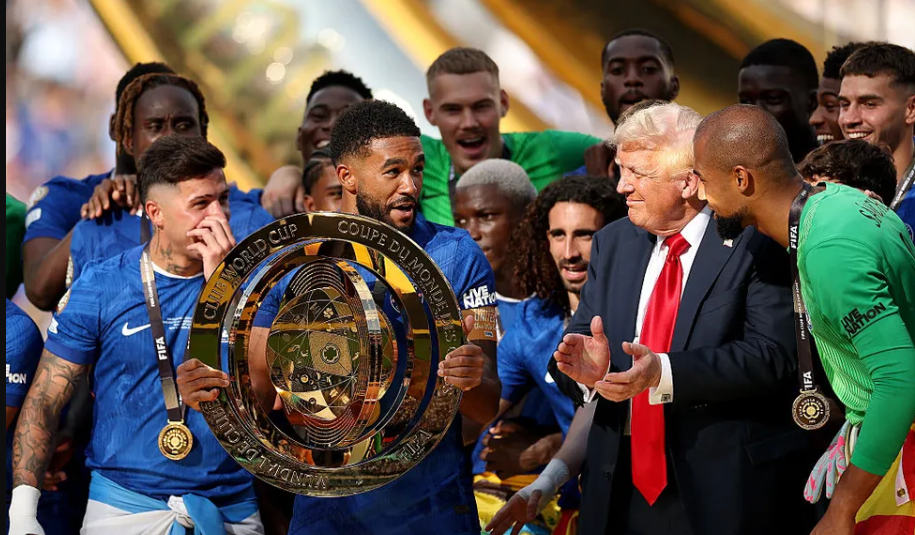
Leadership in sport is one of those concepts that resists precise definition while remaining immediately recognizable in practice. Every great sporting team has moments where the difference between winning and losing is located not in tactics or physical preparation but in the human being who stands between the coach’s instructions and the players’ execution — who translates pressure into purpose and adversity into collective resolve. The team captain is that person, and their influence on outcomes is simultaneously the most studied and least quantifiable variable in competitive sport. Fans following football and team sport across all levels can find dedicated markets and coverage at Dbbet.
What Makes a Captain in Sport
Captain sports philosophy has evolved considerably from the traditional model where the most experienced or physically dominant player automatically received the armband. Modern understanding of leadership in sport recognizes that captaincy requires a specific combination of qualities that do not always align with technical excellence or seniority. Emotional intelligence — the ability to read teammates’ psychological states and respond appropriately — is now considered as important as tactical knowledge or competitive experience. A captain who can identify when a teammate needs encouragement versus when they need honest challenge, who can absorb the coach’s pressure without transmitting panic to the dressing room, and who can maintain their own performance standards while carrying the additional cognitive load of collective responsibility — that combination is rarer than pure sporting talent and arguably more valuable to team outcomes.
The Football Captain: More Than a Coin Toss
The football captain role carries specific responsibilities that extend well beyond the ceremonial functions — the pre-match handshake, the coin toss, the referee communication that the armband formally authorizes. On the pitch, a football captain functions as the coach’s proxy — reading developing situations and making tactical adjustments in the space between instructions. A defensive captain who reorganizes their backline’s shape after a substitution disrupts defensive structure is adding value that no amount of pre-match preparation can guarantee. An attacking captain who lifts a team’s tempo after a poor fifteen-minute spell is performing a psychological function that cannot be delegated to someone on the touchline. The best football captains are simultaneously playing their own role at the highest level and performing a secondary function of collective management that most footballers never develop the capacity to handle.
Historical Captains Who Defined Their Eras
Football history’s greatest captains share a quality that transcends their tactical or technical contributions — they become synonymous with the team’s identity during their tenure in ways that outlast their playing careers. Bobby Moore lifting the 1966 World Cup at Wembley — composed, immaculate, the embodiment of everything England’s football establishment aspired to represent — created an image that defines that era of English football more completely than any tactical analysis could. Diego Maradona’s captaincy of Argentina carried a different character — intensely personal, emotionally volcanic, capable of dragging a team to achievements that objective talent assessment would not have predicted. Didier Drogba’s captaincy of Ivory Coast and Chelsea demonstrated that leadership’s most important moments often arrive in crisis — his famous speech that helped pause the Ivorian civil war through football’s unifying power represents the most extreme expression of what a captain sports figure can achieve beyond the pitch.
Captaincy and Dressing Room Culture
The captain’s most consequential influence on team performance often happens in spaces that cameras never access. Dressing room culture — the unwritten behavioral standards, the tolerance for poor training, the response to internal conflict and external pressure — is shaped more by the senior players and captain than by any formal coaching instruction. A captain who maintains standards when the coach is absent, who addresses internal problems directly rather than allowing them to fester into collective dysfunction, and who creates an environment where younger players feel both supported and challenged is delivering value that shows up in results without ever appearing in post-match statistics. The best captains understand that their primary audience is not the crowd or the media but the twenty or so people who share a dressing room with them across a long season.
When Captaincy Goes Wrong
The captaincy role’s demands create specific failure modes that illuminate what the position actually requires. Captains who lead through intimidation rather than genuine authority create dressing rooms that function through fear — effective in the short term, destructive to long-term cohesion and psychological safety. Captains whose own form deteriorates while carrying leadership responsibilities demonstrate that the cognitive load of collective management genuinely affects individual performance if the player lacks the mental resources to compartmentalize effectively. Captains who side with players against coaching staff during periods of conflict force clubs into impossible situations that typically resolve through someone’s departure. Understanding how captaincy fails helps clarify what successful captaincy requires — and why identifying the right person for the role is among the most important decisions a football manager or sporting director makes.
The Modern Captain: Data, Media, and New Pressures
Contemporary captaincy operates under pressures that previous generations never faced. Social media has given every player — and every opponent, fan, and journalist — a platform that creates narrative momentum around team conflicts, selection grievances, and leadership failures that previously remained internal. A captain managing a dressing room dispute in the social media era cannot assume discretion from participants in the way that was reasonable to expect in previous decades. Data and performance analytics have added another dimension — captains now navigate between coaching staff who increasingly use quantitative performance metrics and players who interpret those metrics through the lens of how they affect individual career prospects. The captain who can translate analytical feedback into motivational language that players receive constructively rather than defensively is performing a cultural translation function that the modern game increasingly requires.
Women’s Football and the Evolution of the Captaincy Role
Women’s football captaincy has produced some of the sport’s most compelling leadership examples precisely because the figures who have occupied the role have done so while simultaneously advocating for the sport’s development, fighting for equitable resources, and competing at the highest level. Marta’s captaincy of Brazil, Megan Rapinoe’s armband tenure with the United States, and Sam Kerr’s leadership of Australia have each carried dimensions beyond football tactics — these captains have been public advocates, cultural representatives, and competitive leaders simultaneously. The additional burden of representing a sport still fighting for institutional parity gives women’s football captaincy a complexity that makes its best practitioners among the most complete leadership examples in global sport, operating across competitive, commercial, and political registers simultaneously.
Captaincy in Other Team Sports
The captain’s role carries different weight across different team sports depending on the game’s structure and the degree of on-field decision-making the rules allow. Cricket’s captain is uniquely powerful — field placement, bowling rotation, and declaration timing are all captaincy decisions with direct match impact that no other major team sport concentrates so completely in a single player. Rugby’s captain operates in a similarly influential tactical space, communicating with referees, adjusting set-piece calls, and managing the game’s tempo in ways that significantly affect outcomes. Basketball’s floor general — often the point guard rather than the formal team captain — influences offensive structure on every possession. The common thread across sports is that effective captaincy requires people who think about the collective first and themselves second, who find genuine satisfaction in others’ success, and who maintain composure precisely when everything around them is most chaotic.
Selecting the Right Captain: What Clubs Get Wrong
The most common captaincy selection error in football is confusing reputation with leadership capacity. A club’s highest-profile player — its most expensive signing, its most technically gifted performer — is not automatically the person best equipped to carry collective responsibility. Some exceptional players are exceptional precisely because of a self-focused competitive intensity that does not translate into the other-directed awareness that captaincy demands. Clubs that select captains through reputation rather than genuine leadership assessment consistently produce situations where the armband becomes a burden rather than a resource — where the designated captain lacks the dressing room credibility or psychological toolkit that the role requires. The most thoughtful sporting directors treat captaincy selection as a distinct evaluation process separate from performance assessment, identifying leadership qualities through observation of behavior in team environments rather than inferring them from individual performance metrics.
