
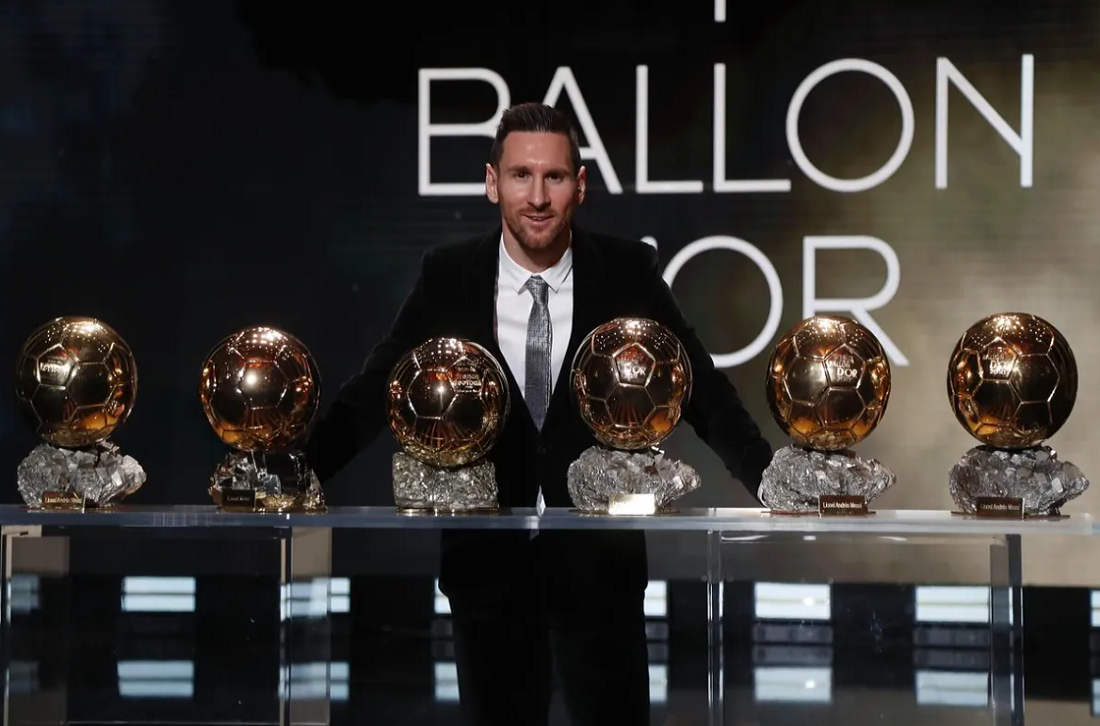
The Ballon d’Or is football’s most debated individual award — a trophy whose selection process, voter base, and criteria have generated controversy since its creation in 1956, and whose legitimacy is simultaneously questioned and desperately desired by every elite player in the sport. That Lionel Messi has won it more times than any other player in history — by a margin that continues to grow — tells a story about individual greatness that the award’s imperfections cannot diminish. Understanding messi ballon d or history requires engaging with both the extraordinary performances that justified each award and the broader context of what the trophy represents in football’s cultural economy. Fans following football’s biggest moments and competitions can find dedicated coverage at dbbet.
The Ballon d’Or: Football’s Most Coveted Individual Prize
The ballon d or — literally golden ball in French — was created by France Football magazine in 1956 as an award for the best European footballer of the year, initially restricted to players competing in European leagues. Its evolution across subsequent decades — expanding to include non-European players in 1995, then merging briefly with FIFA’s World Player of the Year award before separating again — reflects the tension between a historically prestigious institutional award and the commercial pressures of modern football’s global media economy. The trophy’s specific weight in football culture exceeds most comparable individual awards in other sports precisely because football’s collective structure makes individual distinction genuinely difficult to achieve and therefore meaningful when it is recognized. A sport where no individual player can carry a team in the way that a basketball player can makes individual greatness harder to identify and therefore more impressive when the evidence is sufficient to justify recognition.
Messi’s First Ballon d’Or: The Beginning of a Dynasty
Lionel Messi’s first ballon d or victory in 2009 arrived at the conclusion of a season that had delivered the treble with Barcelona — La Liga title, Copa del Rey, and Champions League — in performances whose combined quality made any other selection genuinely indefensible. The specific nature of Messi’s contribution that season — not merely scoring at exceptional rates but the movement, creation, and collective elevation of teammates that his presence enabled — demonstrated qualities that pure goal-scoring statistics could not fully capture but that voters across European football recognized in the unanimous way that his margin of victory reflected. Winning the award at twenty-two years old established a competitive baseline that subsequent seasons would need to exceed to justify continued recognition — a challenge that Messi proceeded to meet with a consistency that the award’s history had never previously encountered.
The Record-Breaking Accumulation
Ballon d or winners across the award’s history includes the greatest names the sport has produced — Ronaldo, Rivaldo, Ronaldinho, Zidane — figures whose individual excellence justified their recognition in the years they won. Messi’s accumulation of victories across multiple seasons created something genuinely unprecedented — not merely winning in exceptional years but maintaining the performance standard required for recognition across a career span that exposed every limitation of any player who has ever competed against him. The specific seasons where his award was most controversial — where injury or collective team underperformance complicated the case for individual recognition — are fewer than the seasons where the award felt almost automatic, where the only genuine question was whether any other player had produced sufficient performance quality to mount a credible challenge. The accumulation to eight Ballon d’Or victories represents a record that future players will measure themselves against rather than realistically expect to surpass.
The 2019 Controversy: Virgil Van Dijk and the Criteria Question
No examination of Messi’s Ballon d’Or history can avoid the 2019 award — the edition whose controversy most directly exposed the tensions within the award’s selection criteria and voter base. Virgil van Dijk’s Champions League winning season with Liverpool, combined with his transformation of that defensive unit into the most formidable in European football, produced an argument for collective defensive excellence that the award’s historical preference for attacking production had never previously been required to engage with seriously. Messi’s winning margin was narrow enough that the debate was genuine rather than academic — and the controversy it generated forced a useful public conversation about what individual excellence in a collective sport should actually be measuring. The award’s subsequent structural reforms — changing the voter base, clarifying criteria, shifting the evaluation period — reflected institutional acknowledgment that the controversy had identified genuine methodological questions worth addressing.
Messi Ballon d’Or 2023: The World Cup Validation
The significance of Messi’s most recent Ballon d’Or victories — occurring in the aftermath of Argentina’s 2022 FIFA World Cup triumph in Qatar — reflects a specific narrative completion that the award’s history had been building toward across his entire career. The persistent criticism that his Ballon d’Or accumulation was achieved without the international trophy that would validate his individual excellence as genuine greatness rather than merely club-level dominance was comprehensively answered by the World Cup victory — the tournament that football’s collective wisdom treats as the ultimate competitive validation. Messi’s performances across that tournament — not merely the final’s dramatic conclusion but the accumulation of decisive contributions across multiple knockout matches — produced the specific evidence that the remaining skeptics required. The subsequent Ballon d’Or recognized not just the World Cup achievement but the continuation of individual performance standards at Paris Saint-Germain and then Inter Miami that sustained excellence beyond the tournament high point.
The Messi-Ronaldo Binary and Its Effect on the Award
The specific historical context within which most of Messi’s Ballon d’Or victories occurred — the decade-long binary with Cristiano Ronaldo that dominated football’s individual recognition conversation — gave each award an adversarial dimension that previous eras of the trophy had not experienced in quite the same concentrated form. Ronaldo’s five victories during this period — his claim to comparable individual greatness expressed through a different athletic and performance profile — ensured that neither player’s recognition went uncontested and that the standards required for Ballon d’Or success during the competitive peak of both careers were higher than the award had previously demanded. The binary’s effect was ultimately to elevate both players’ legacies — the sustained excellence required to win in years where the opposing argument was always present created a mutual verification of greatness that independent careers could not have generated. Future players winning the award will do so without the specific competitive context that made each Messi or Ronaldo victory a statement in a decade-long dialogue.
What Messi’s Style Meant for Individual Recognition
The specific way that Messi plays football — the combination of dribbling, vision, passing, and goal-scoring that produces performances whose impact on collective outcomes is distributed across assists, chances created, and the spatial effects of his movement rather than concentrated in the goal tallies that make individual contribution most legible — created interesting methodological challenges for Ballon d’Or evaluation across his career. The seasons where his goal-scoring volume was highest tended to produce the most straightforward recognition. The seasons where his overall impact was highest but concentrated in creation and collective elevation rather than pure goal accumulation required voters with sufficient tactical understanding to recognize contributions that less sophisticated evaluation frameworks miss. That the award consistently found its way to Messi across both types of season reflects either the voters’ genuine analytical sophistication or the simpler reality that no contemporary was performing at a level that made any alternative selection genuinely defensible.
Legacy Beyond the Trophy Count
Messi’s Ballon d’Or record is ultimately a proxy for something that the trophy itself cannot fully contain — a career whose cumulative contribution to football’s understanding of what individual excellence can look like has permanently altered the benchmarks against which subsequent generations of players are evaluated. The specific combination of qualities that he brought to the sport — the left foot whose technical range has not been replicated, the spatial awareness that functioned effectively across multiple tactical systems, the competitive longevity that maintained peak performance standards into his mid-thirties — represents a profile that statistical analysis can document but that watching him play communicated in a more immediate and comprehensive way. Future Ballon d’Or winners will receive their awards in a landscape where the comparison to Messi functions as the ultimate evaluative reference point — not because the award requires it but because football’s collective memory will make the comparison inevitable across the decades that follow his career’s conclusion.
What Eight Ballon d’Or Victories Tell Us About Greatness
The number eight is ultimately less important than what the accumulation represents — a sustained period of individual excellence in the sport’s most competitive era, recognized by voters across European football who watched every relevant performance and made their individual assessments across eight separate evaluation processes. The variations in how convincingly each victory was won — from the near-unanimous early awards through the genuinely contested middle-career editions to the World Cup-validated later recognition — collectively map the arc of a career that demonstrated excellence across contexts, systems, teammates, and competitive challenges that changing circumstances across a fifteen-year peak introduced. Greatness in sport is most authentically demonstrated not by peak performances but by the sustained delivery of excellence across the full range of circumstances that a long career encounters — and Messi’s eight Ballon d’Or victories document that sustained delivery more comprehensively than any alternative measure the sport’s individual recognition systems have produced.
